Author of report on classic cars as alternative investment calls sector ‘exceptionally’ complex
Original Article – Jul 2, 2015 By Deborah Nason – Investment News
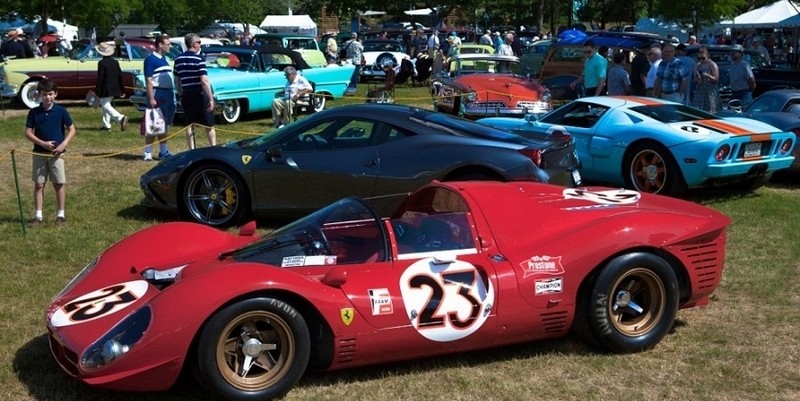
It’s that moment many investors have encountered. You pass by the local auto show and there it is: the classic car of your dreams. But is it worth the investment?
The value of rare classic cars has risen in value more than 500% over the past 10 years, according to the Historic Automobile Group’s HAGI Top Index.
“There are more buyers than sellers,” Dietrich Hatlapa, founder of the Historic Automobile Group research organization, said of the demand.
Several major factors are behind the market surge, according to Mr. Hatlapa, including the growth of wealth globally, an increase in the collecting lifestyle over the past 20 years and the fact that classic cars are a finite group. There is currency hedge potential, he said, as cars can be easily transported to other countries with favorable exchange rates.
Demand has also grown due to other factors: the growth of the Internet and more collectors’ magazines, according to Rupert Banner, auctioneer and collector car specialist for Bonhams auction house. Mr. Banner recently auctioned a 1938 Bugatti for a record $1.595 million.
“Information is much more accessible to people and more people are charting the prices, which has led to much more interest in classic cars,” he said.
Collecting cars has also become more fashionable, and more events are being staged, Mr. Banner said.
“It’s a very social hobby, and there is a lot of interest in [older] car design and history in an era with a lot of technological advances,” he said.
But it isn’t a hobby for everyone, experts warn.
MARKET DRIVERS
“There’s a myth that there are always bargains out there,” said Jim Glickenhaus, a renowned collector, whose historic classic car collection has been featured in Road & Track magazine. “When I bought my cars [long ago], they were a lot of money then. It’s a dangerous game.”
Mr. Glickenhaus is concerned about what he sees as hyperinflation in the classic car market over the past decade.
“It’s voodoo numbers,” he said. “People are just jumping on the bandwagon.”
The sales of certain cars are going through the roof, particularly European sports cars from the mid ’50s and ’60s, according to Steve Linden, a vintage vehicle appraiser, broker and author. He said he sees no indications that the market will soften in the next five years.
“The vast majority of people buying classic cars over $100,000 now are investors, not collectors,” Mr. Linden said. “A growing number are from overseas and they’re looking for a place to park their money.”
And they’re paying cash.
“There is an investment quality to these cars if you approach them methodically,” said Michael Mische, an independent car researcher and collector who wrote a white paper on classic cars as an alternative asset class.
“There’s a methodology of emotion — that is, staying disciplined.” he said, “And a methodology of investment — asking yourself how much should you pay and what is the holding period of return.”
INVESTMENT APPROACH
Of utmost importance is the car’s provenance (the records of who owned it, where it was stored, who worked on it, what they did, how much it was driven, etc.) and its pedigree (original purchase and manufacturing documentation), Mr. Mische said.
“There is a qualifiable sector rotation — certain cars come in and out of popularity. You have to know the values, just like any stock in the stock market,” he said.
There are ways to invest properly in this asset class, said Mr. Linden, who advises investors to take a two-pronged approach:
Become an expert or hire one. “This is an exceptionally complex area to invest in, especially because certain attributes are important on certain cars,” Mr. Linden said. “And most collectors specialize in certain genres. They’re only experts in that area, so how can they diversify their collection? Think of it like a stock portfolio.”
Look at the real numbers. You can lose money after you consider maintenance, storage, insurance, commissions (buy/sell side can be 6% to 10%), consignment fees, transaction fees, transportation costs, garaging, and opportunity cost.
Like the financial stock market, indices track the movement of classic car prices. The international HAGI indexes are based on both direct and auction sales. Roughly 70% of the index derives from individual transactions.
These records satisfy a need.
“People write to us every day, saying, ‘This constitutes a measure of my wealth and I want to track the value. Is my car performing in line with the market?’” said HAGI founder Mr. Hatlapa. “Many have also told me, ‘I told my significant other — I could finally show them that the money [I spent on a car] was not lost.”
“The indices are useful for general trends,” Mr. Banner said, “but it depends on the parameters and the individual history of each car. Not all cars are equal when considering factors such as colors, restoration status, certain markets, production cars, etc.”
‘ELIGIBLE’ CARS
What type of car should an investor focus on?
“Those eligible for events,” Mr. Banner said. “They tend to be a market force for the industry that lures people into the hobby.”
The main types of classic car events are road tours and circuits; and historic “concours,” or high-end car shows, accompanied by car auctions.
“Invest only in concours-quality cars,” Mr. Mische said. “These cars have been judged by a qualified judge and have earned a certain number of points.
”There are three main market-driving seasons and events for the classic-car market, according to Mr. Linden: Scottsdale, Ariz., in January, Amelia Island, Fla., in March, and Pebble Beach, Calif., in August.
In the Northeast, the best known concours is held in Greenwich, Conn., in May.
The bottom line is to buy a car that means something to you as an investor,” Mr. Glickenhaus said. The common threads of his cars are their stories, history and physical beauty.
“People want to know: ‘How fast? How much? What is a certain car worth?’” he said. “But who cares?”